The Ultimate AbacusExplore numbers. Discover why.
Home / Chapter 5
Chapter 5 · The Ultimate Abacus tool

Meet the frame.

Before moving a bead, identify its rod, its counting area and the decimal boundary. Then ask what its movement means.

Optional read-aloud uses your browser’s voice.
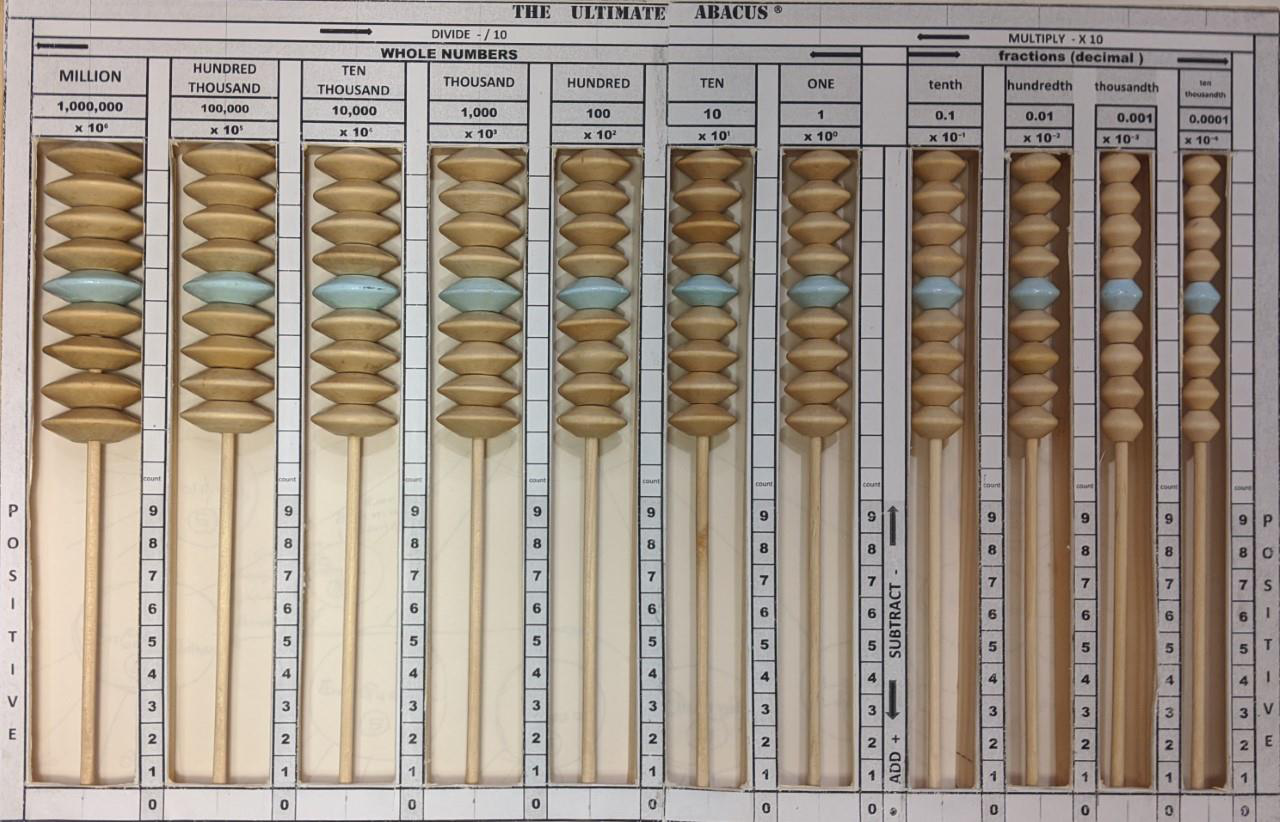
Photograph of the wooden prototype showing positive whole and fractional places
Original photograph from page 24. This is the positive portion of the prototype, not the complete signed frame. Open full size
Question

If one bead looks larger than another, does its size alone tell you its numerical value?

Count and place work together

Each decimal digit position uses nine movable beads and an empty count for zero. Rod labels identify place value. Bead diameters provide visual and tactile cues; they are not proportional measures of numerical value.

The cut bicone profile reflects the designer’s attention to touch and movement. A contrasting fifth bead is a grouping cue: moving it alone still counts as one bead of that rod’s value.
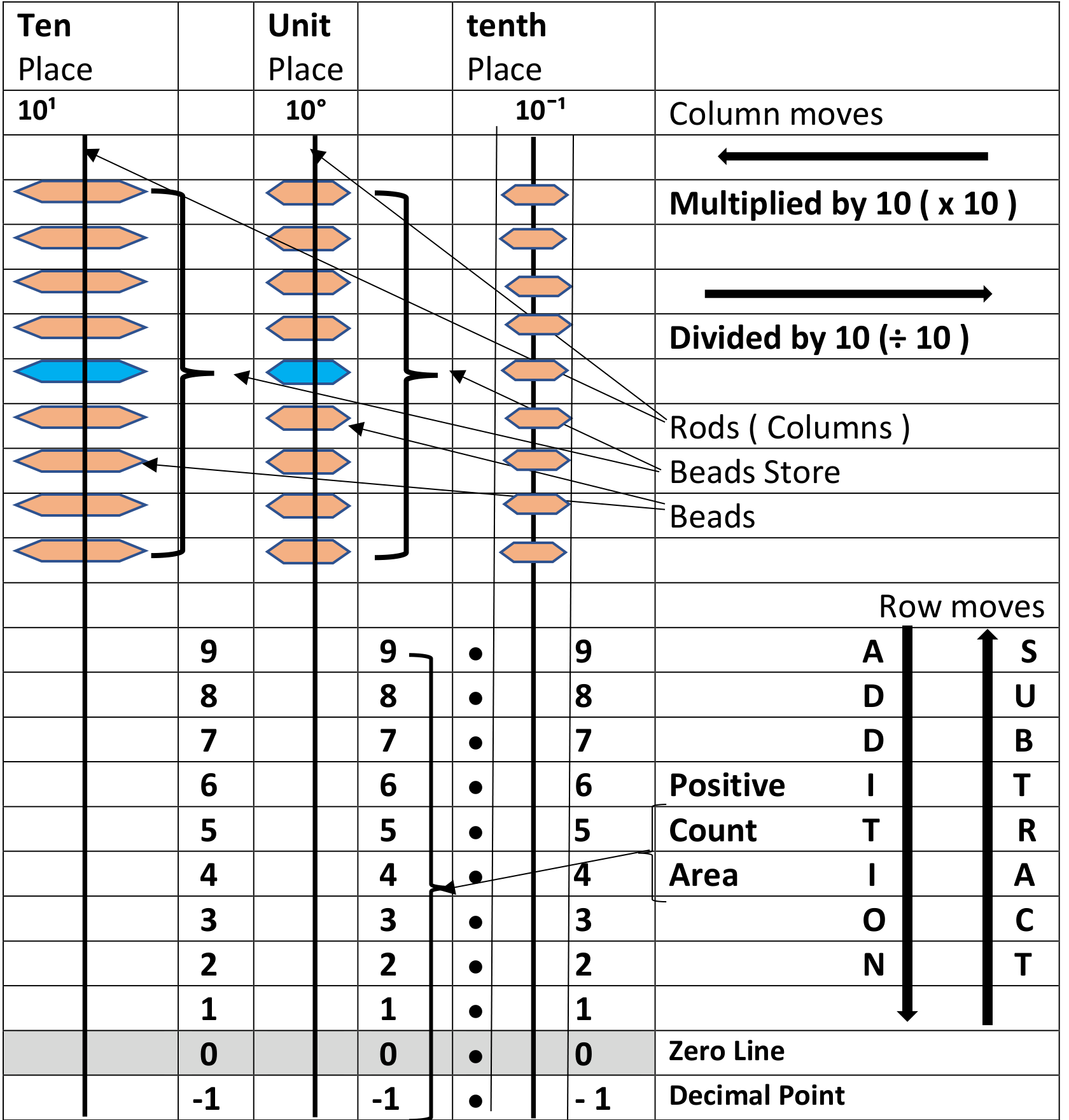
Original diagram labelling rods, bead store, counting area, zero line, decimal boundary and movement directions
Original page 18 diagram. Labels are preserved. Open full size to examine the details. Open full size
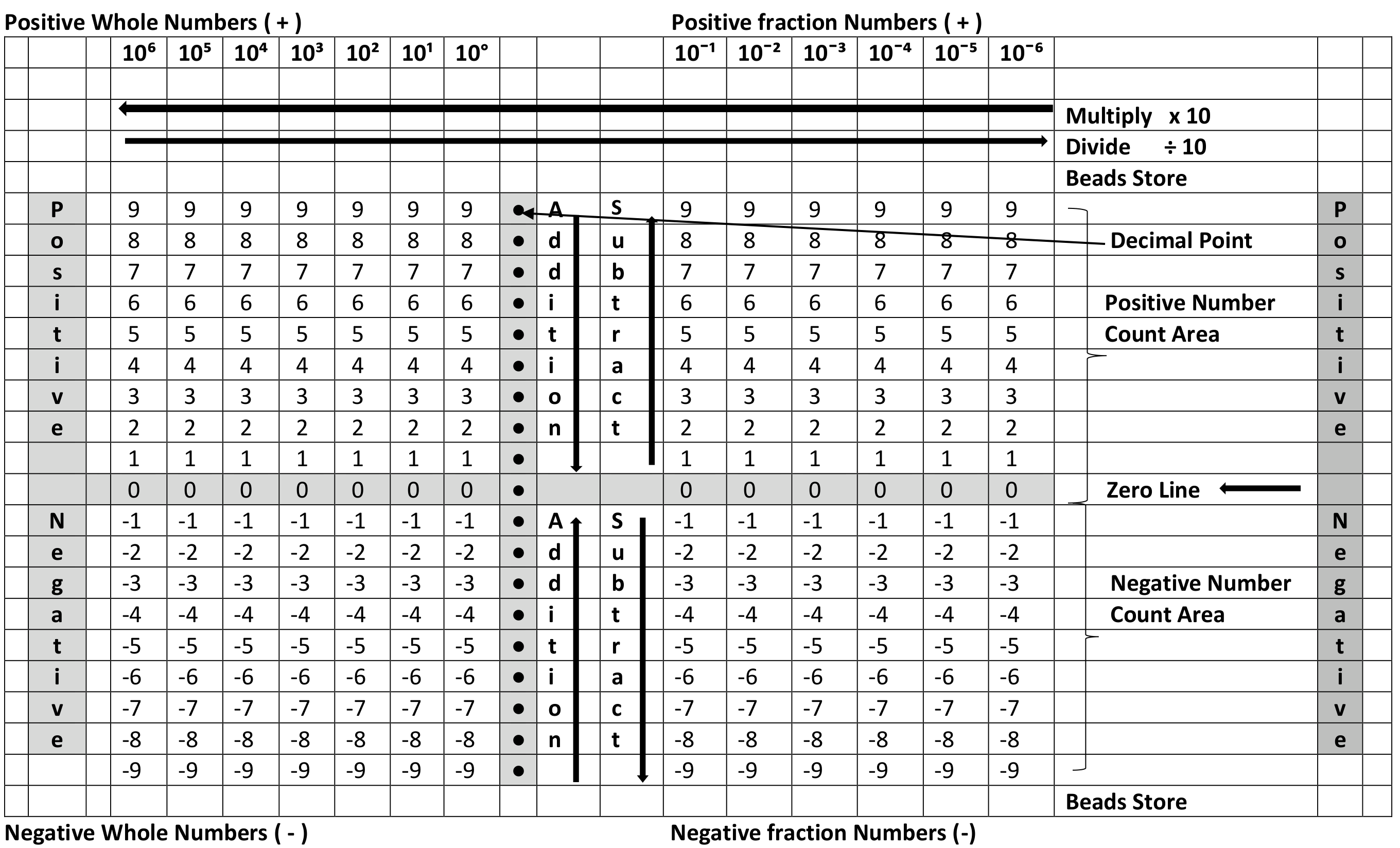
Full signed layout with positive and negative stores and whole and fractional places
Original page 19. The dot column marks the decimal boundary; the zero line separates sign areas. Open full size

Movement needs context

AreaActivate beadsReturn to storage
Positive, store aboveMove down: increase positive magnitudeMove up: decrease positive magnitude
Negative, store belowMove up: increase negative magnitudeMove down: decrease negative magnitude
Why “add a bead” can be ambiguous
Activating another negative unit changes −3 to −4. Adding positive one to −3 gives −2 and removes one negative unit. Always state the sign and starting value before describing movement.
Try it

Activate one more negative unit from −3. What is the new value?

Explore the four layouts

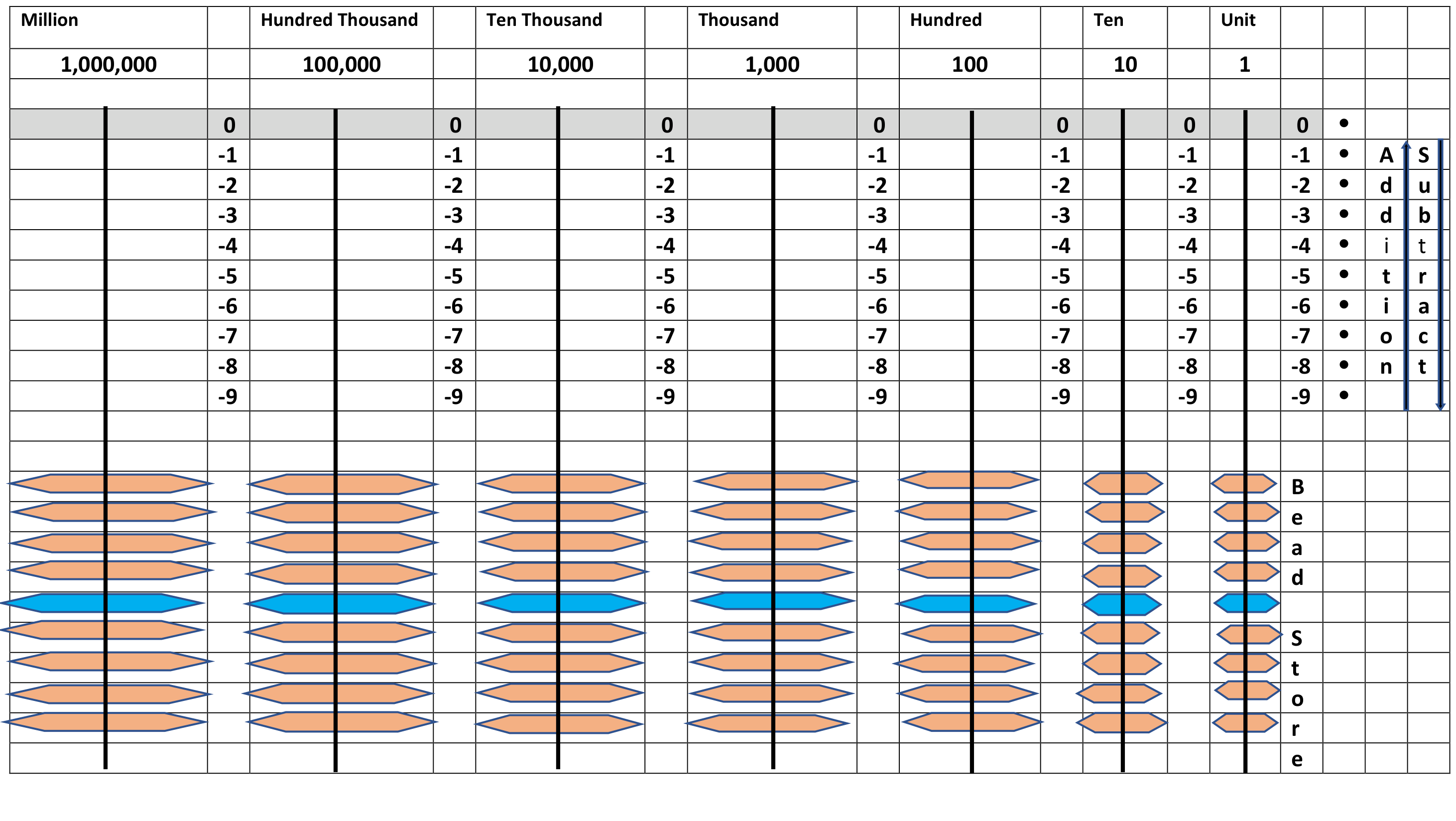
Positive whole places
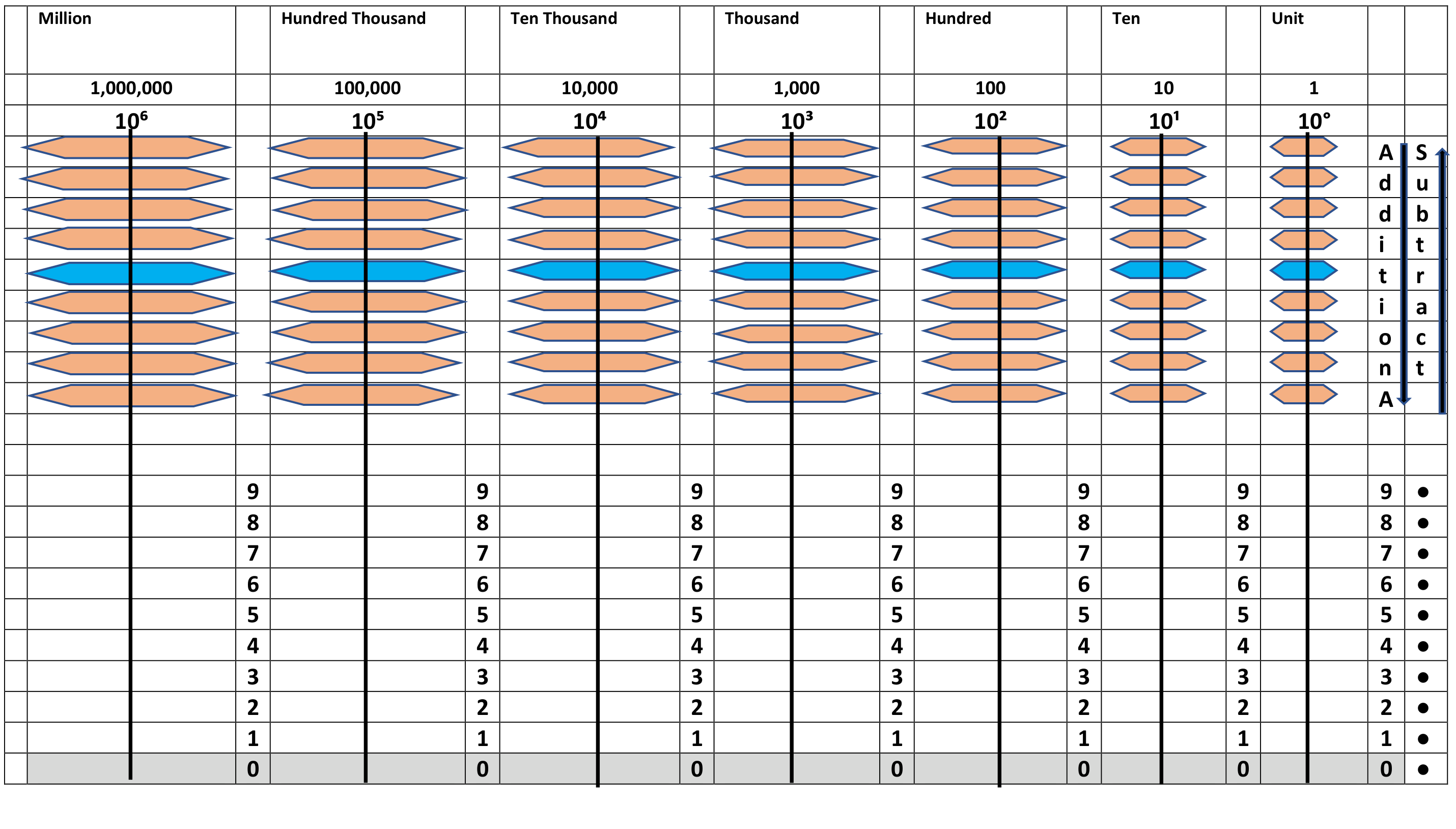
Original positive whole-number rods, store and movement arrows
Original page 20. Stored beads initially give an empty count. Open full size
Negative whole places
Original negative whole-number rods, lower store and arrows
Original page 21. Activating negative beads moves them upward. Open full size
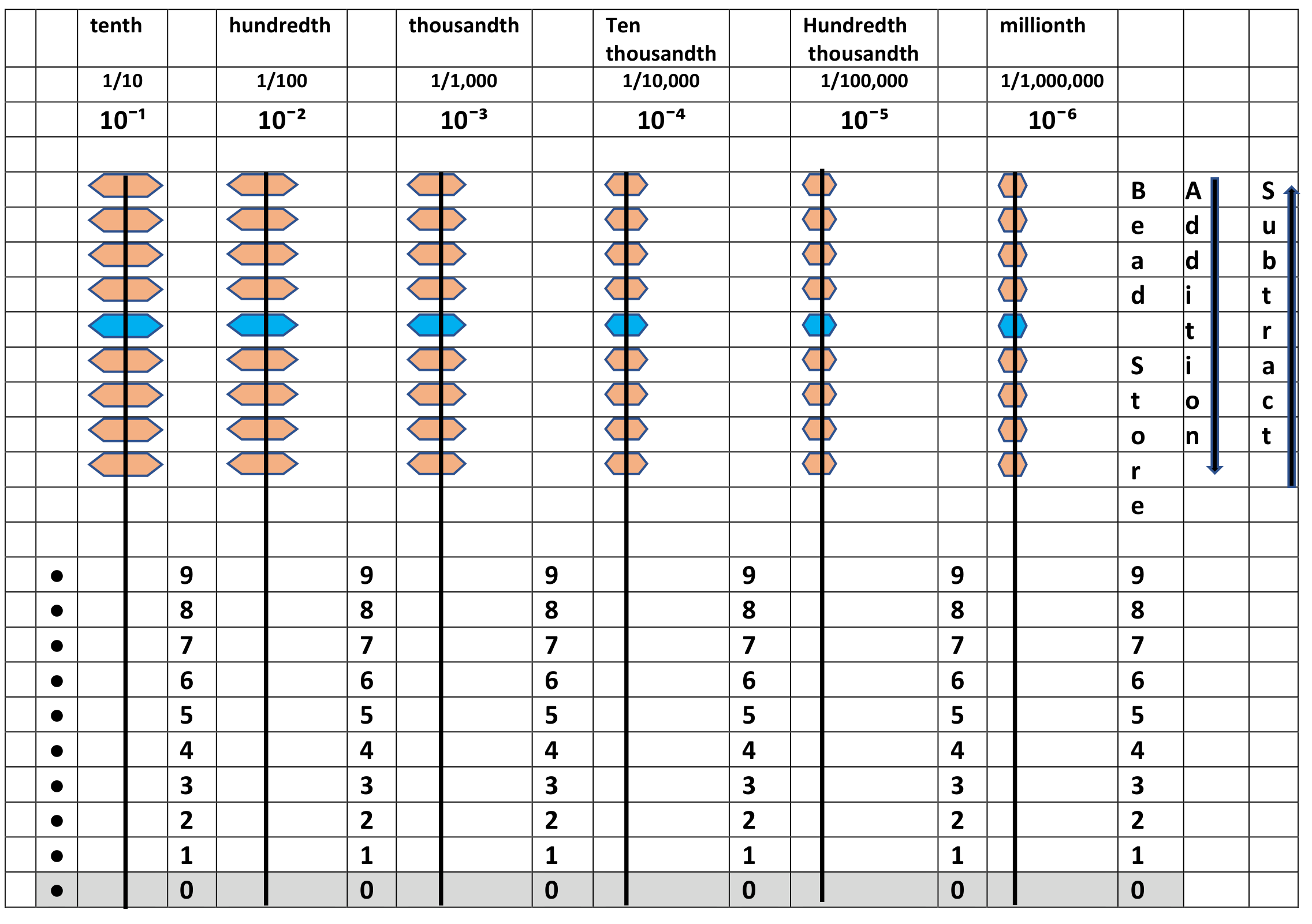
Positive fractional places
Original positive fractional rods and decimal-boundary markers
Original page 22. Each place right is one tenth of the preceding place. Open full size
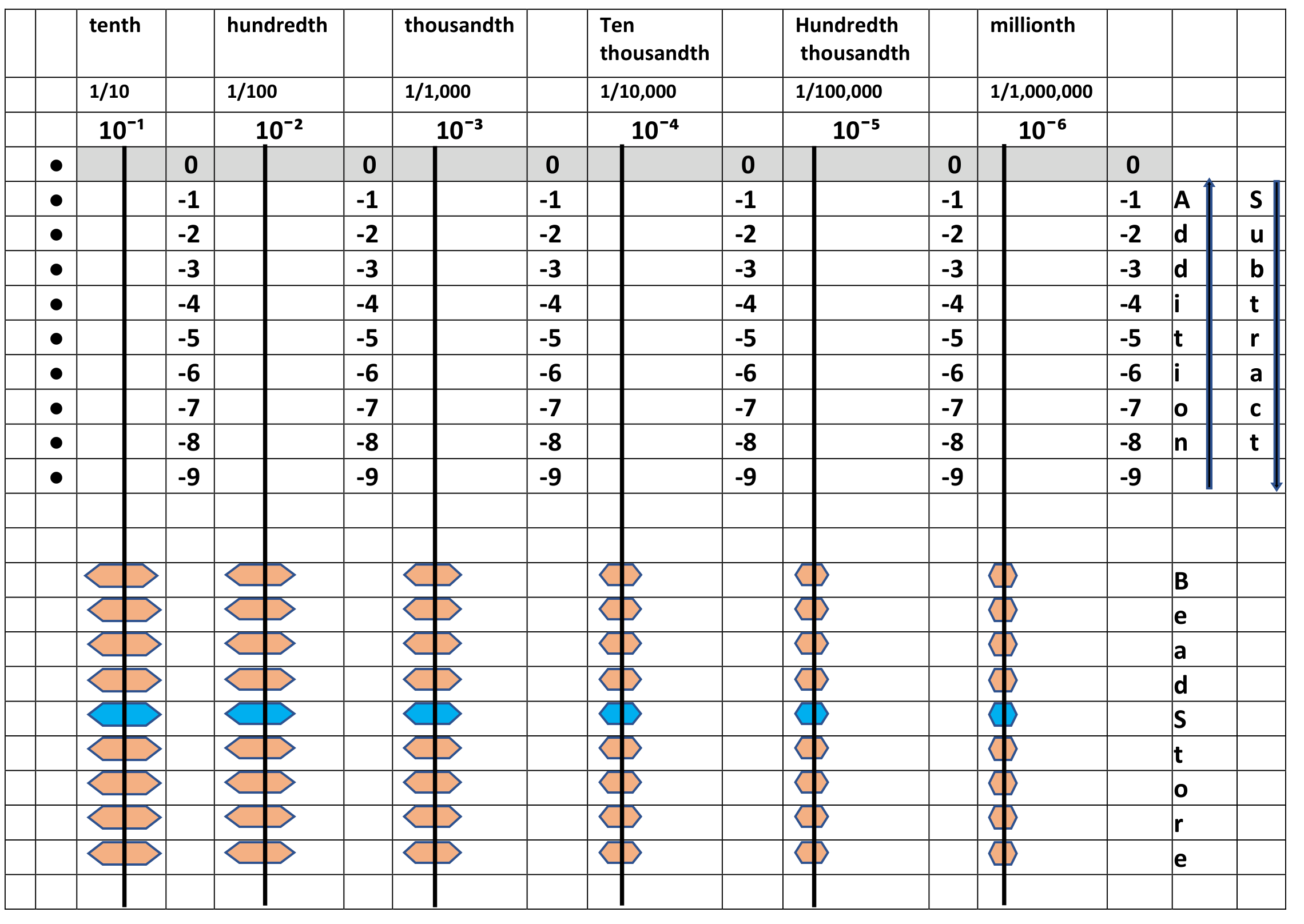
Negative fractional places
Original negative fractional rods, lower store and decimal markers
Original page 23. Read the whole fractional magnitude with one negative sign. Open full size
Reflect

How can the same upward direction have different meanings in the positive and negative areas?

Shifting is re-entering counts
Recreate a digit pattern one rod left to multiply by ten or one rod right to divide by ten. Beads slide vertically on fixed rods; they do not slide sideways between rods. The destination places must exist.

Explore this on the interactive frame