
Chapter 3 · The decimal number system
Same digit. Different value. Why?
A bead count tells us how many. The rod position tells us the value of each bead. Explore whole places, fractions, zero and signs.
Optional read-aloud uses your browser’s voice.
Question
Why is one hundred worth ten tens—and one unit worth ten tenths? Can the same idea explain both?
| Place | Value of one bead | Power notation |
|---|---|---|
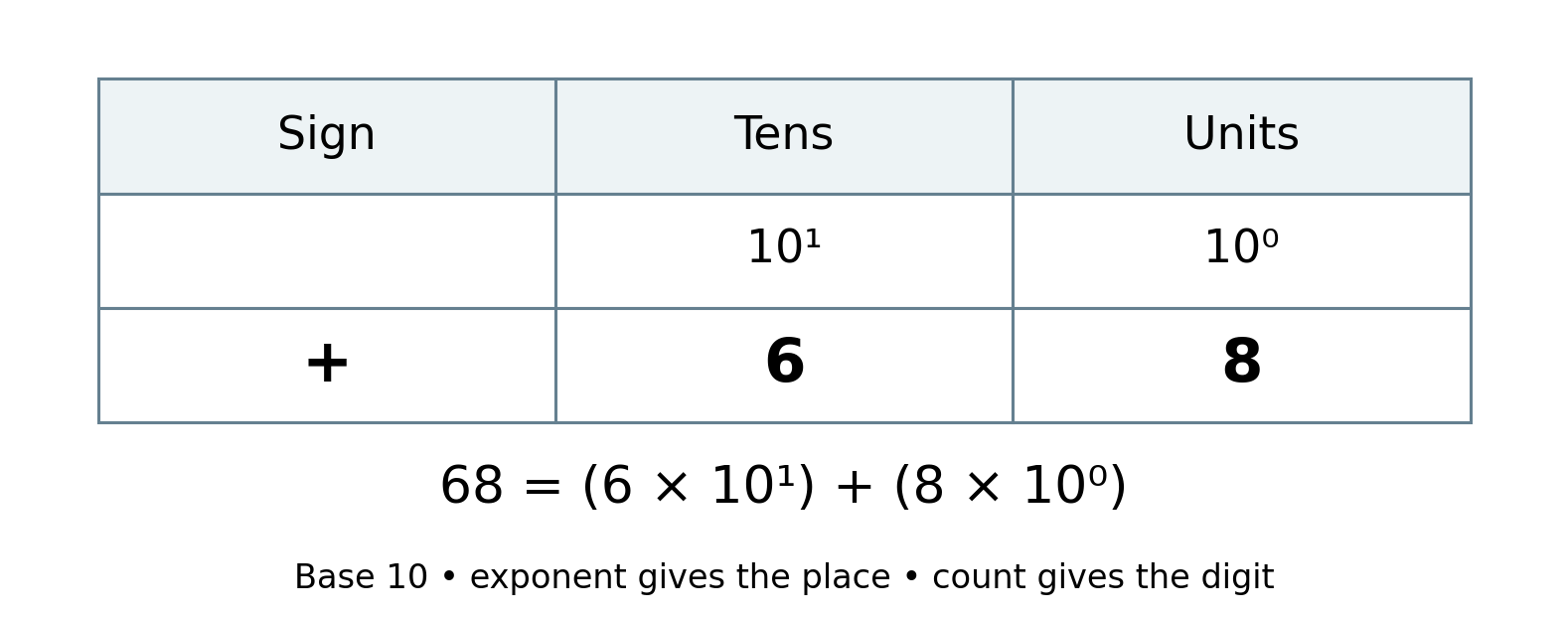
| Hundreds | 100 | 10² |
| Tens | 10 | 10¹ |
| Units | 1 | 10⁰ |
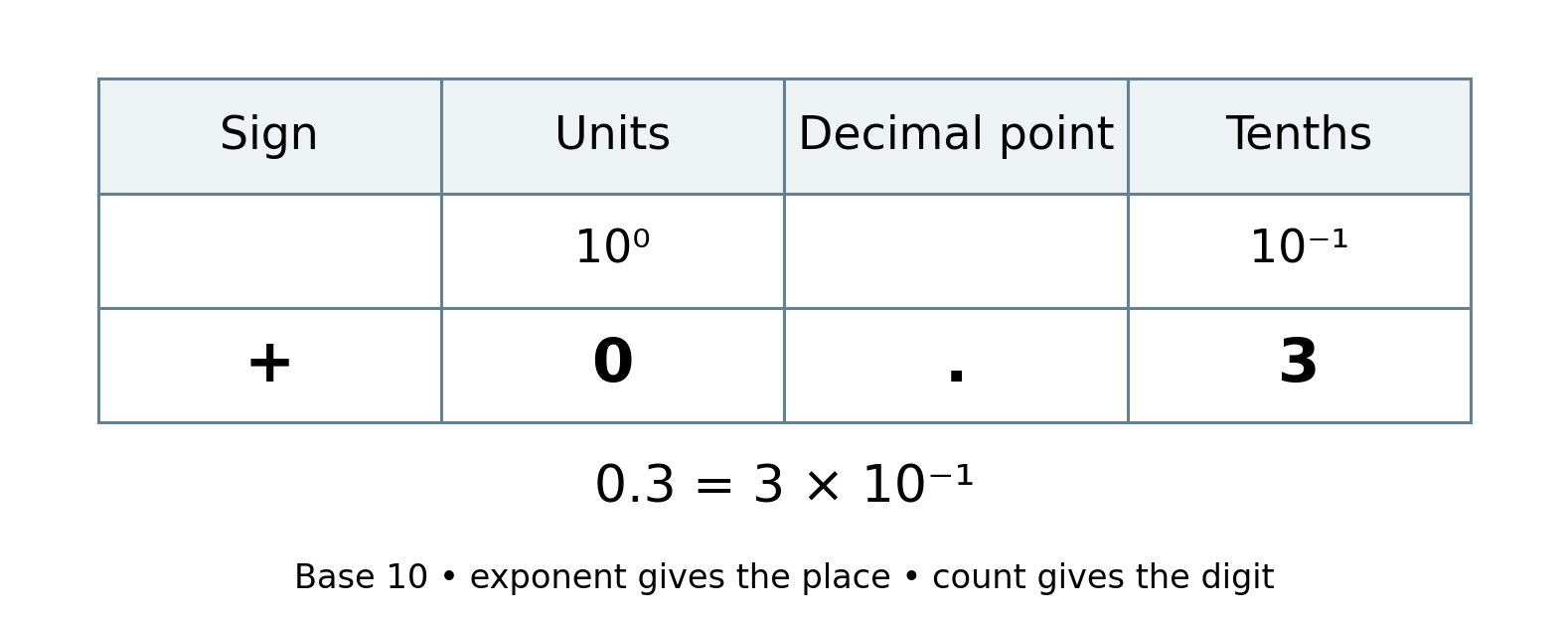
| Tenths | 0.1 = 1/10 | 10⁻¹ |
| Hundredths | 0.01 = 1/100 | 10⁻² |
A cue about direction
Each place to the left is ten times the value of its neighbour. Each place to the right is one tenth of its neighbour.
The decimal boundary
The decimal point separates units from tenths. Three active tenths beads represent 0.3.
Zero holds a place
The zero in 206 records no tens. Removing it gives 26, a different value. No active beads represent a zero digit; the rod label still matters.
Try it
Which number has the same value as 0.5?
Choose an answer when you are ready.
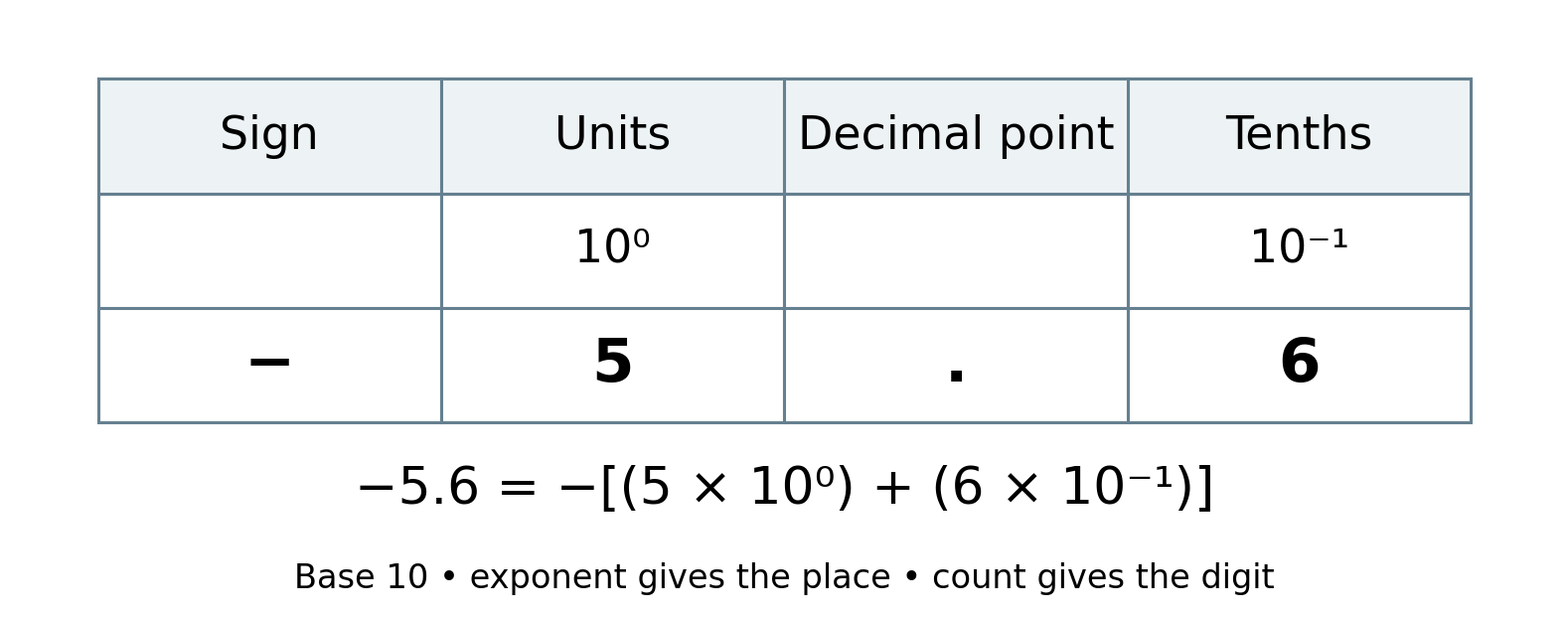
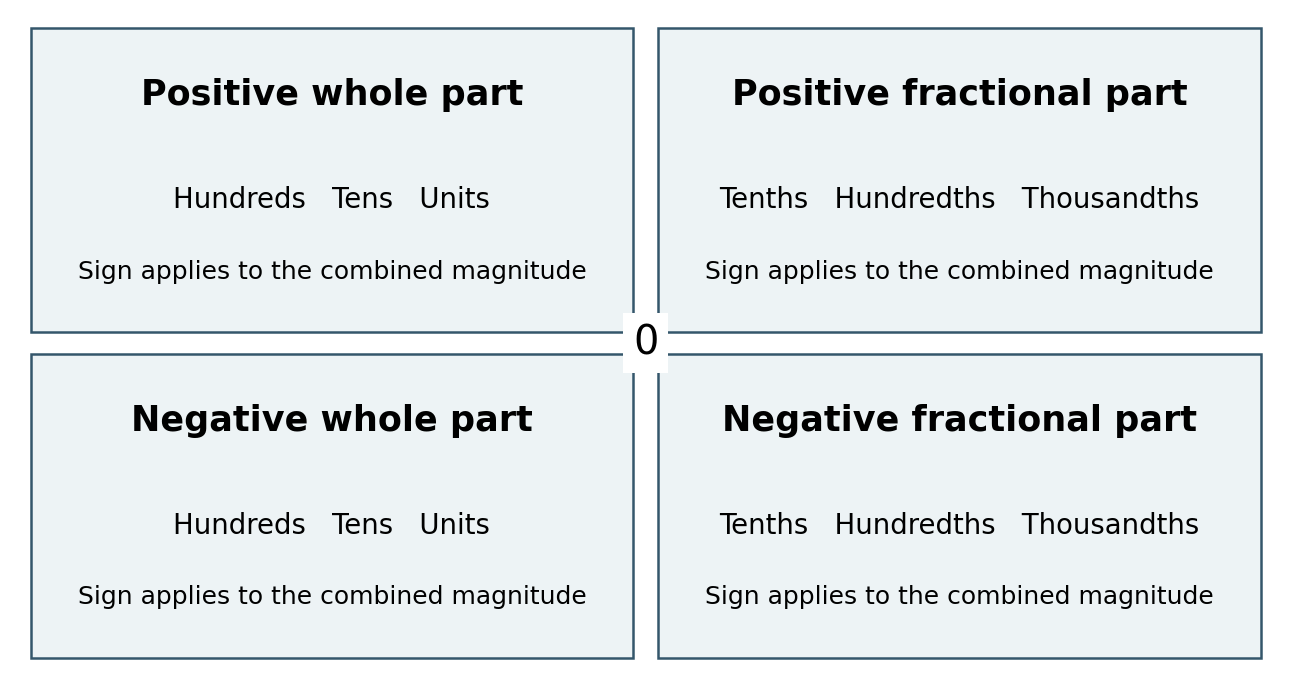
Sign applies to the whole number
Reflect
Where would −0.3 appear? Why does having zero whole units not make its fractional part positive?
What a finite frame can show
A frame has a largest place and a smallest place. It can show 0.125 exactly if thousandths are available. It cannot show the infinitely recurring decimal 1/3 exactly. Rounded or truncated displays must be identified. Zero is neither positive nor negative.