
Meet the frame.
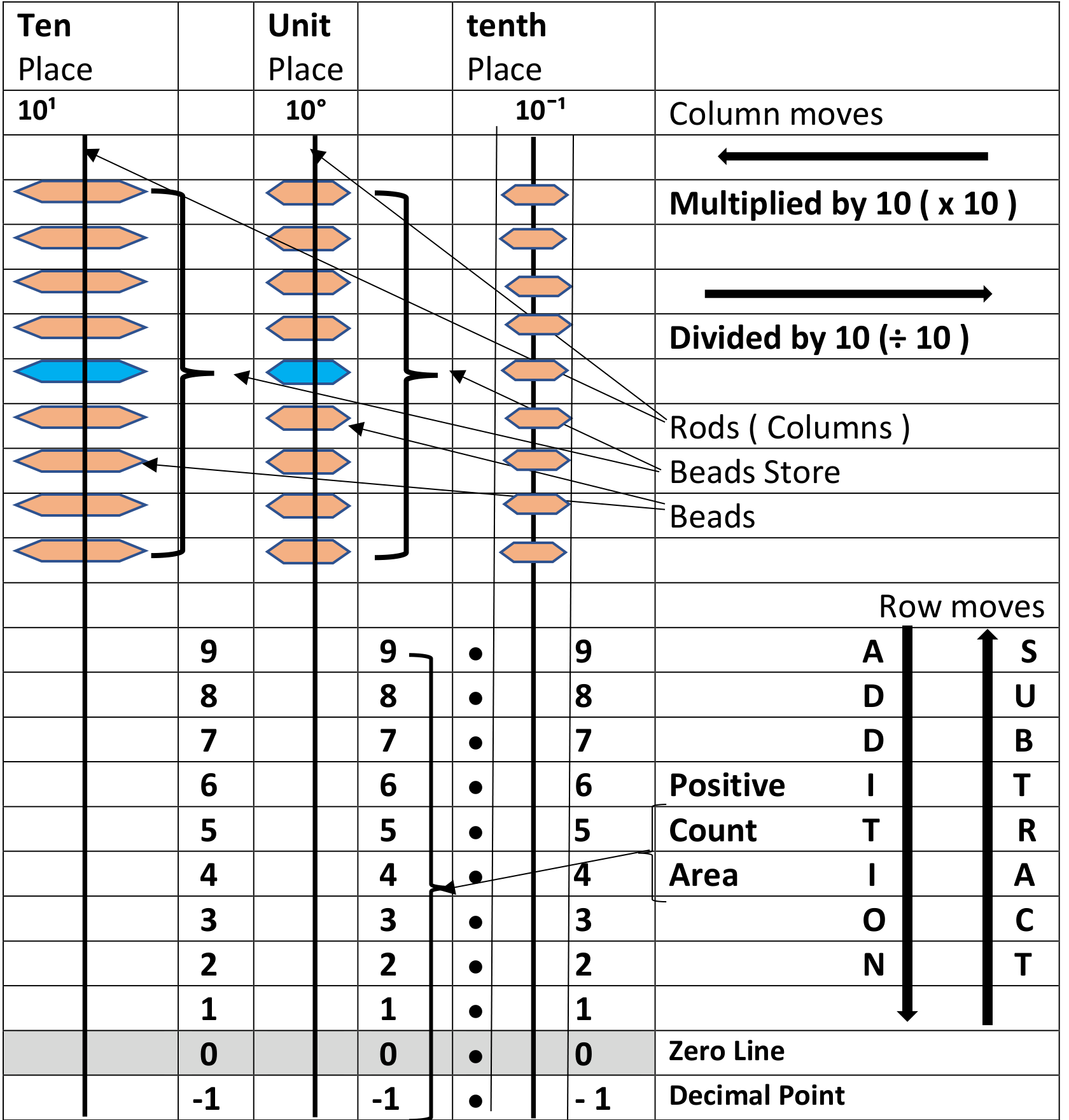
Before moving a bead, identify its rod, its counting area and the decimal boundary. Then ask what its movement means.
Optional read-aloud uses your browser’s voice.
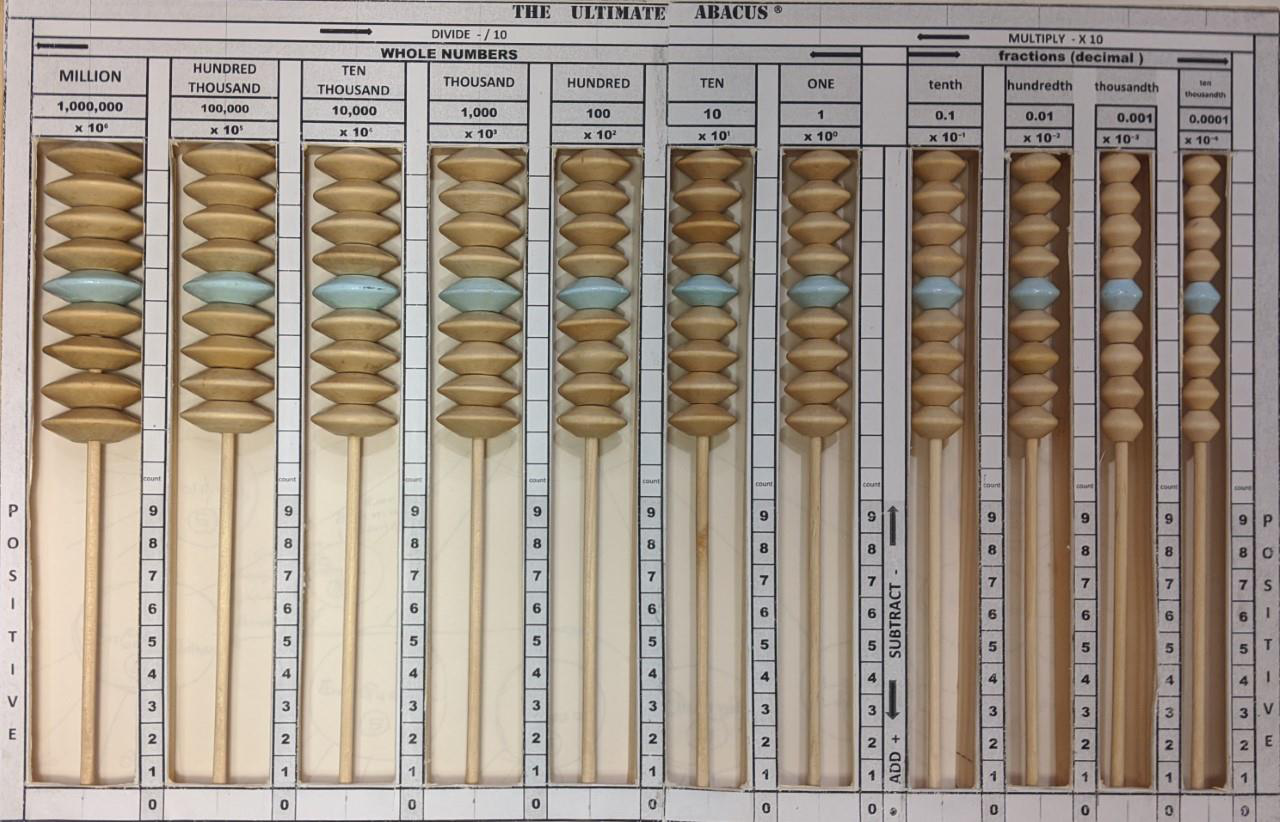
If one bead looks larger than another, does its size alone tell you its numerical value?
Count and place work together
Each decimal digit position uses nine movable beads and an empty count for zero. Rod labels identify place value. Bead diameters provide visual and tactile cues; they are not proportional measures of numerical value.
The cut bicone profile reflects the designer’s attention to touch and movement. A contrasting fifth bead is a grouping cue: moving it alone still counts as one bead of that rod’s value.
Movement needs context
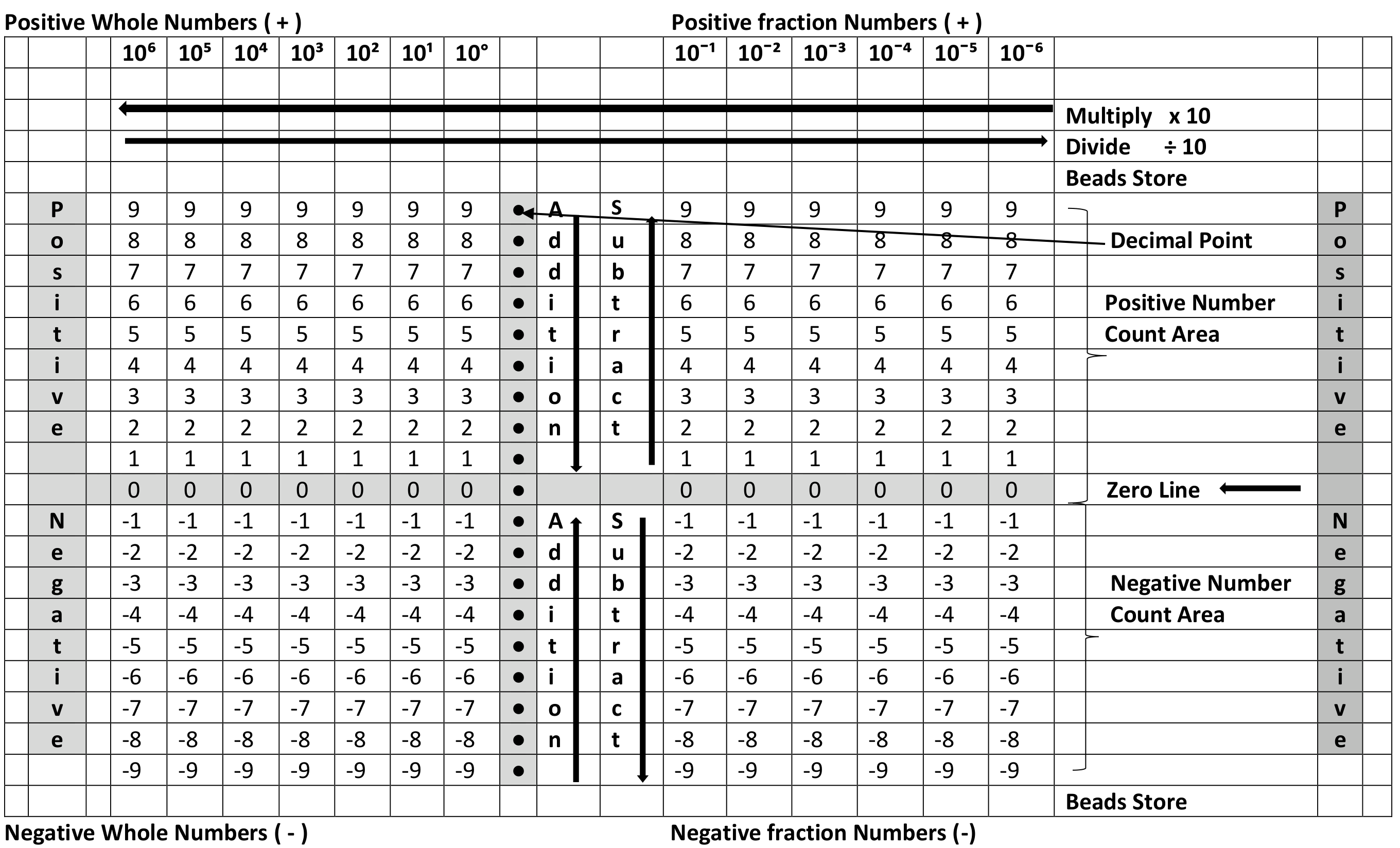
| Area | Activate beads | Return to storage |
|---|---|---|
| Positive, store above | Move down: increase positive magnitude | Move up: decrease positive magnitude |
| Negative, store below | Move up: increase negative magnitude | Move down: decrease negative magnitude |
Why “add a bead” can be ambiguous
Activate one more negative unit from −3. What is the new value?
Choose an answer when you are ready.
Explore the four layouts
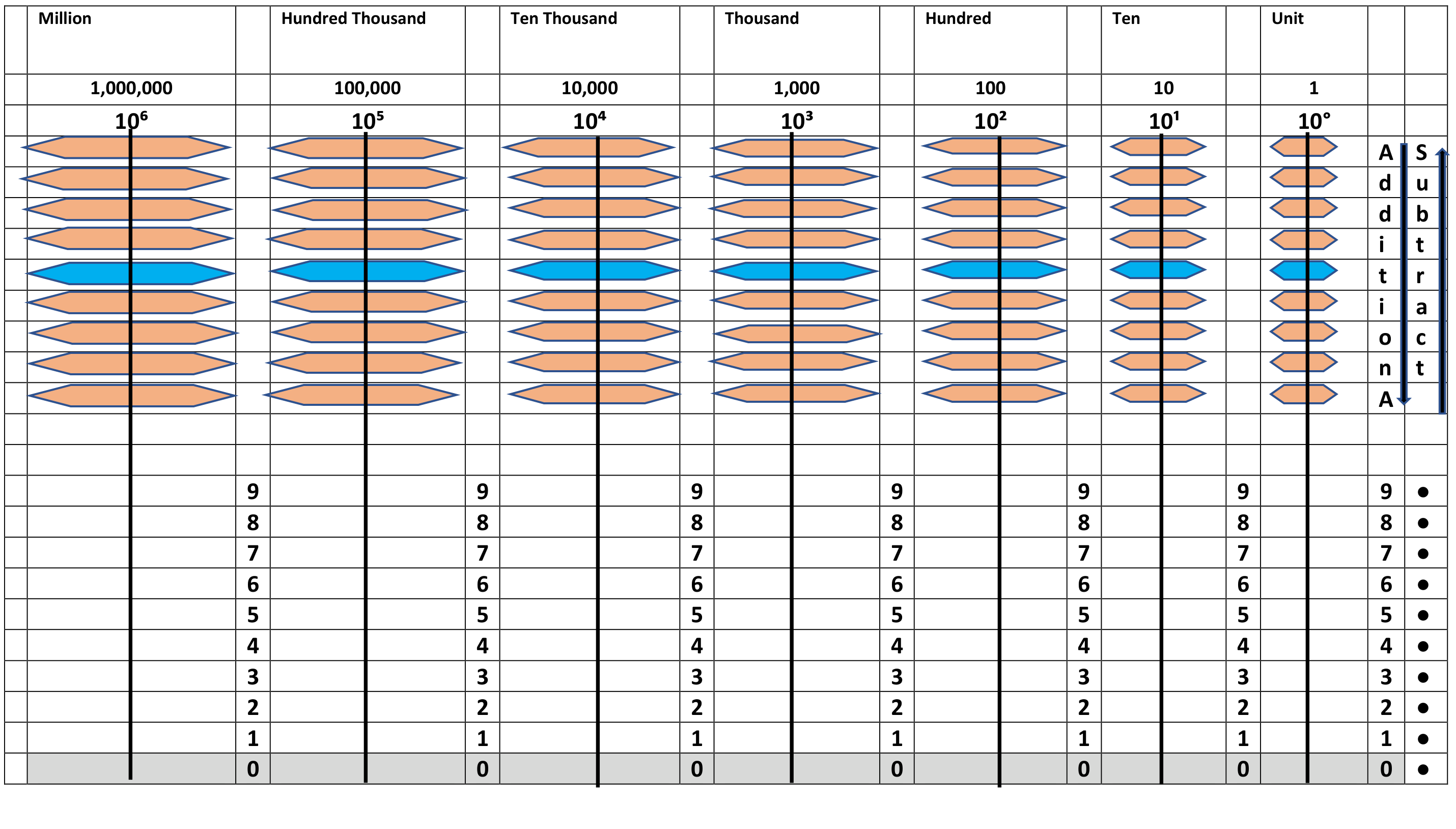
Positive whole places
Negative whole places
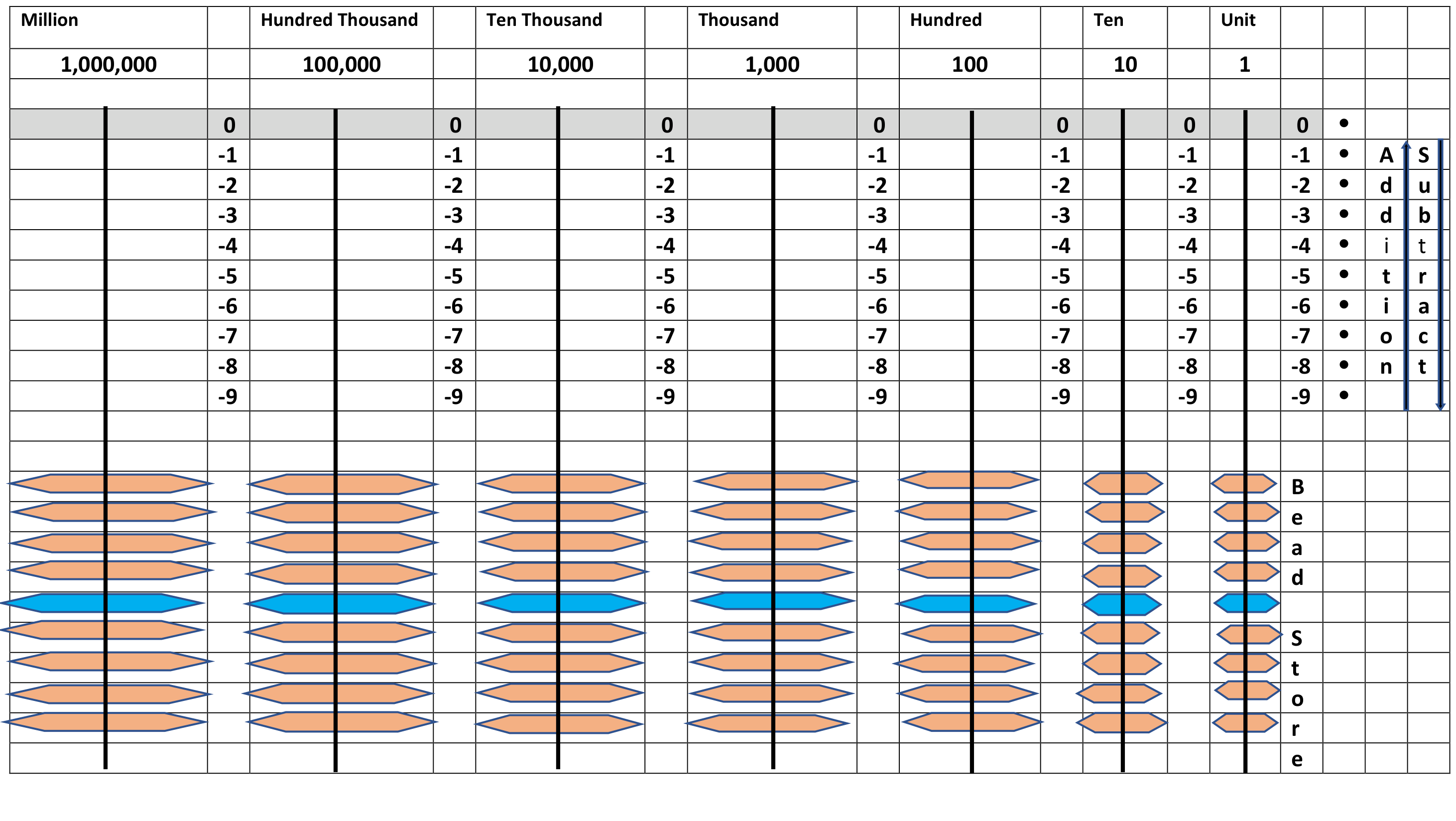
Positive fractional places
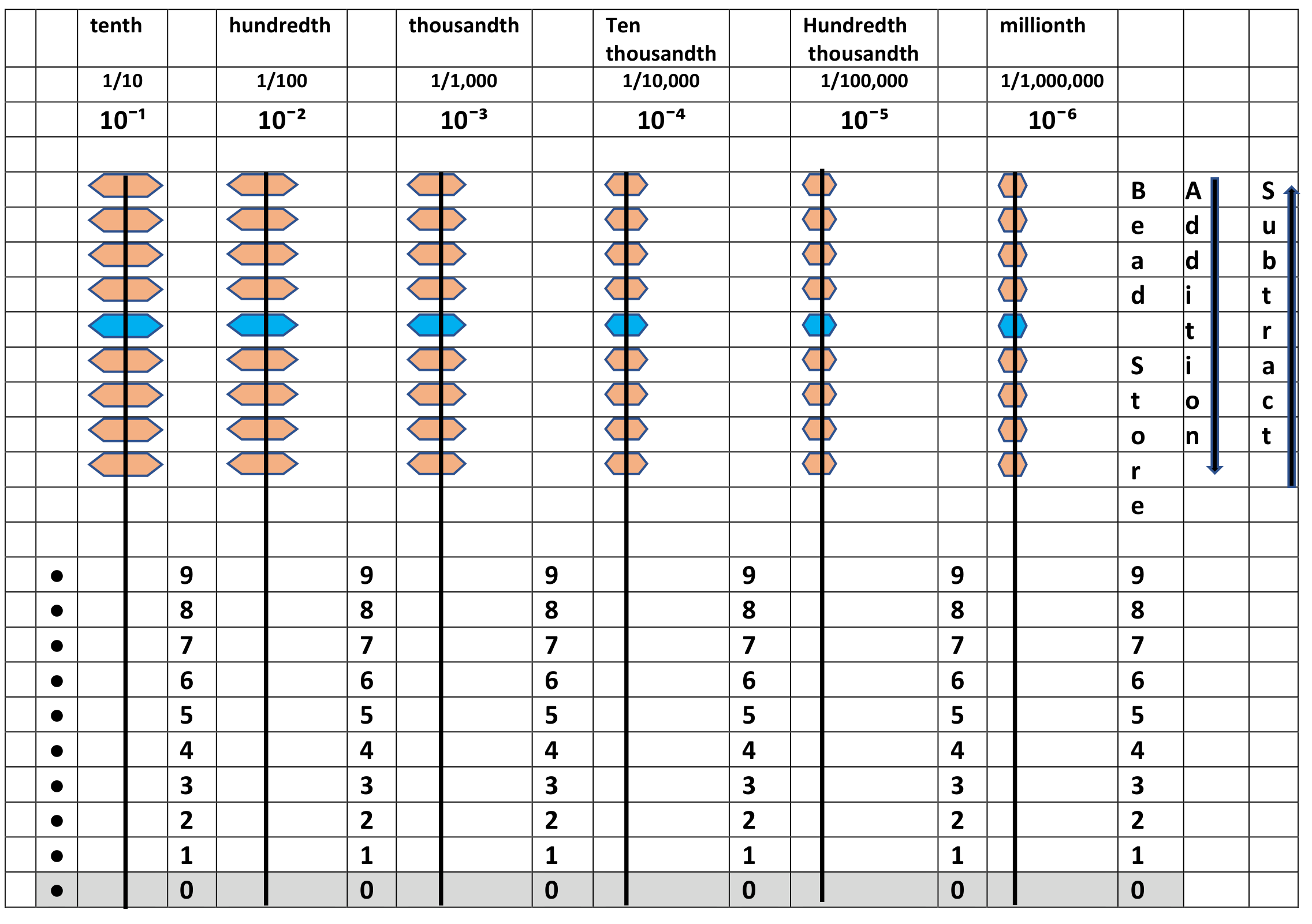
Negative fractional places
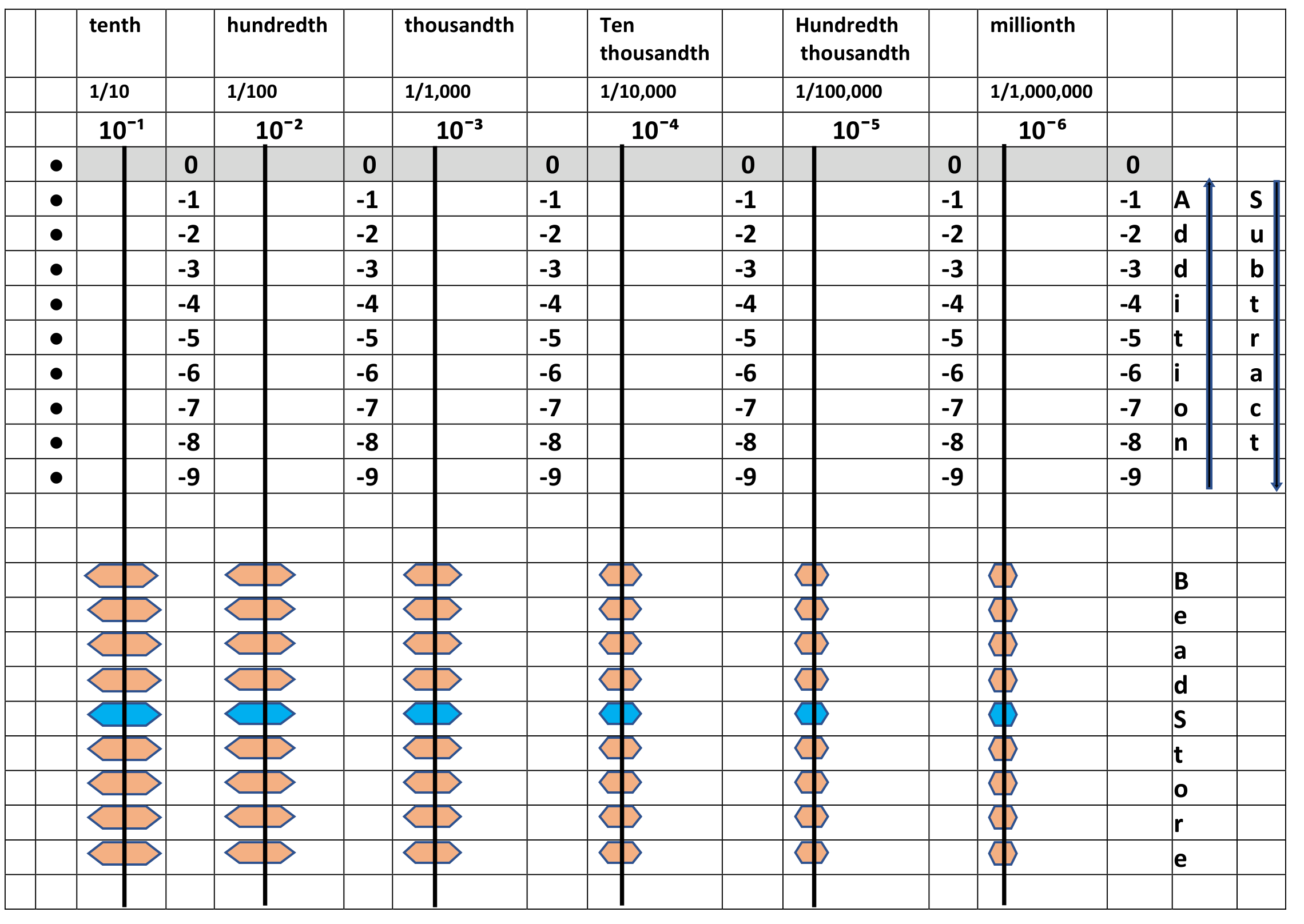
How can the same upward direction have different meanings in the positive and negative areas?