
Chinese suanpan
A comparison of representations and teaching possibilities—not a ranking. Practical merits and limitations below are our design analysis.
How it works
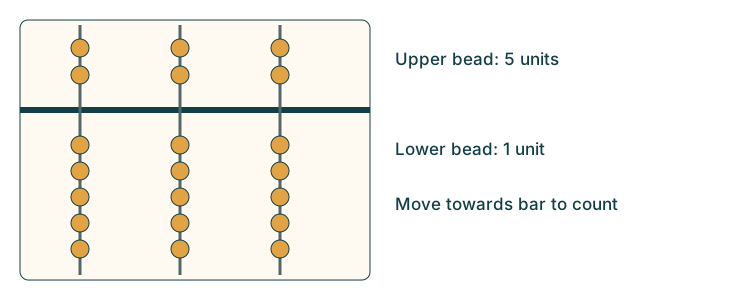
The traditional suanpan described by the Smithsonian uses two upper five-value beads and five lower unit-value beads on each rod, separated by a reckoning bar.
Suanpan upper counter: 5 × rod value
TUA active counter: 1 × rod value
Practical merits
The extra counters provide additional configurations for established calculation procedures. Rods give positional values.
Limitations and teaching needs
More available configurations require rules about valid readings and exchanges. Upper/lower sections encode five and one, rather than positive and negative areas.
What the evidence establishes
The museum source documents structure and history. It is not a classroom experiment demonstrating better attainment. This review has not established a suanpan-specific educational effect.
How this relates to The Ultimate Abacus
TUA’s upper and lower regions indicate sign, not five-versus-one bead value. Its normal decimal position has nine equal-value beads. Similar-looking frames must therefore be interpreted differently.
What does “above the bar” mean in each system?
Sources
Reviewed 6 October 2026. Provider descriptions are not independent endorsements.
All comparisons