
Rekenrek / number rack
A comparison of representations and teaching possibilities—not a ranking. Practical merits and limitations below are our design analysis.
How it works
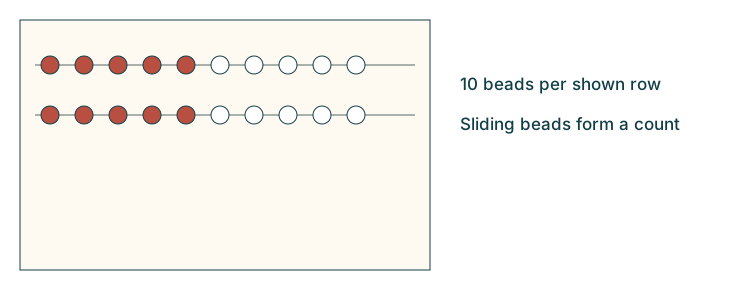
The Math Learning Center’s rack has rows of ten movable beads, split into groups of five by colour. Its app supports up to ten rows and moving individual beads or groups.
7 = 5 + 2
Practical merits
Five-and-ten groupings offer ways to discuss parts within a number, such as seven as five plus two. Covers and movable groups can support questioning.
Limitations and teaching needs
Rows do not inherently encode decimal positions. Explicit labels and a different task are needed to turn a number rack into a place-value representation.
What the evidence establishes
The provider describes number-sense benefits and classroom uses. Its product page is documentation and an educational rationale, not an isolated causal trial.
How this relates to The Ultimate Abacus
TUA uses a contrasting fifth bead as a within-rod reference, but all beads retain one rod-unit of value. It adds explicit place labels. The cues differ; their relative effectiveness is untested.
How can recognising five help you see seven without counting one by one?
Sources
Reviewed 6 October 2026. Provider descriptions are not independent endorsements.
All comparisons