
Base-ten blocks / number pieces
A comparison of representations and teaching possibilities—not a ranking. Practical merits and limitations below are our design analysis.
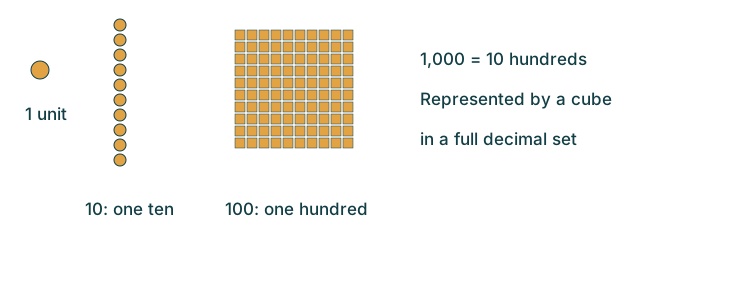
How it works
Number Pieces provides units, tens and hundreds that can be joined in tens or broken apart. It also supports arrays for multiplication and division.
10 × 1 = 1 × 10
Practical merits
Actual or virtual grouped pieces make exchanges explicit. Arrays supply a spatial model of equal groups.
Limitations and teaching needs
Materials need a declared reference unit. More pieces can create clutter; linking actions to written notation needs instruction. Physical and screen versions have different handling experiences.
What the evidence establishes
The developer’s page establishes functionality and teaching intentions. The manipulative meta-analysis supports some aggregate benefits, moderated by instruction and study design; it does not certify this app.
How this relates to The Ultimate Abacus
TUA records grouped value using rod position. A hundreds bead is not a hundred-unit block, so TUA should explain exchanges rather than imply proportional volume.
Why does joining ten units preserve value?
Sources
Reviewed 6 October 2026. Provider descriptions are not independent endorsements.
All comparisons